
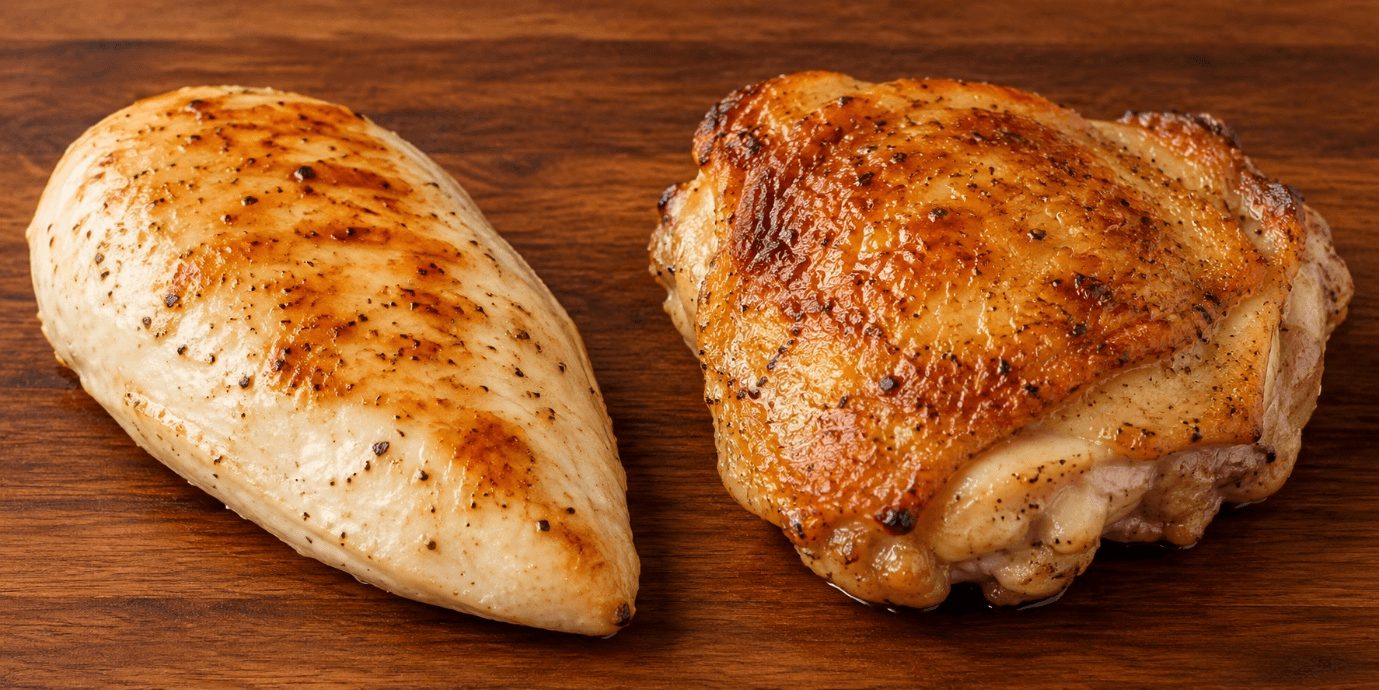
The Great Chicken Debate: Breast or Thigh?
The Great Chicken Debate: Breast or Thigh?
When planning healthy meals, chicken is often one of the first protein sources that comes to mind. It's versatile, affordable, and packed with nutrients. However, many people still wonder whether chicken breast is the healthier choice compared to chicken thigh.
Chicken breast has long been favoured for its lower fat content, particularly among those following a weight-loss diet. But does that mean chicken thighs should be avoided? Not necessarily. With proper preparation, chicken thighs can be a nutritious, flavourful, and balanced in addition to a healthy eating plan.
Let's explore the facts behind these two popular cuts of chicken.
A Closer Look at Their Nutritional Value
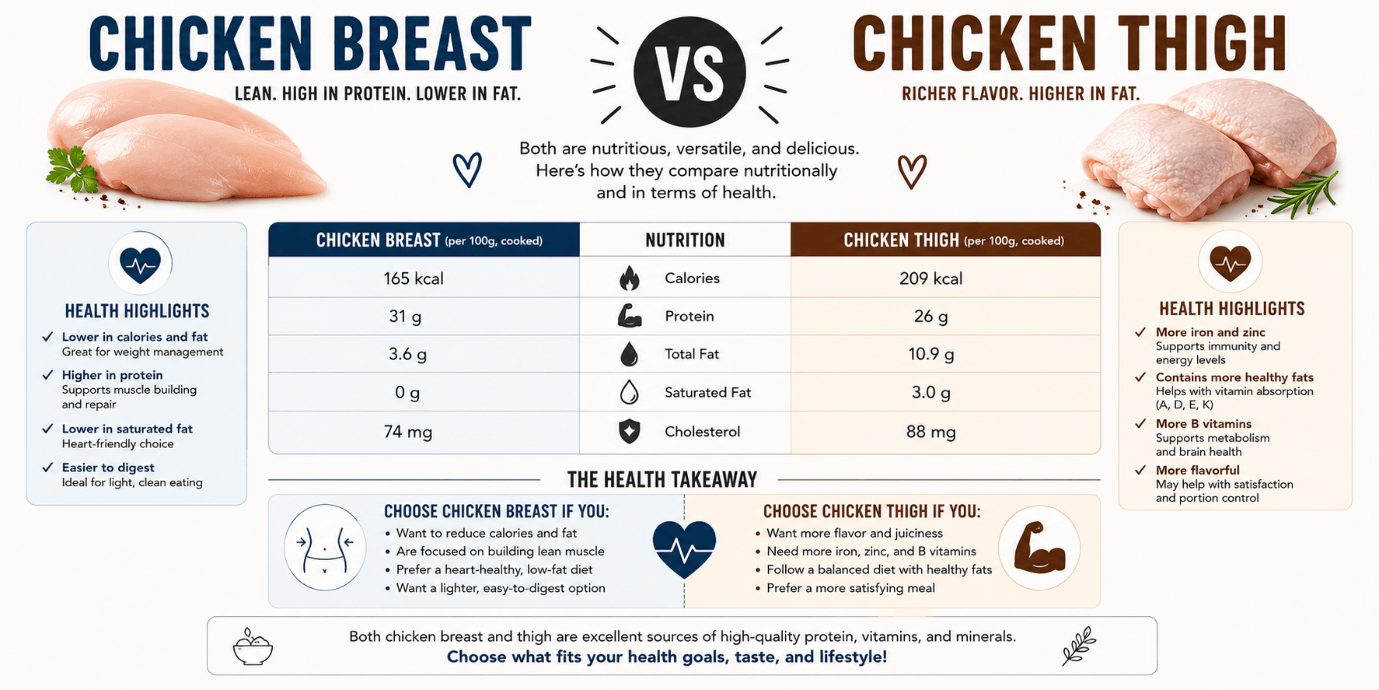
Both chicken breast and chicken thigh are excellent sources of protein and essential nutrients. The main differences come down to their calorie and fat content.
Chicken Breast
A typical 100g serving of cooked, skinless chicken breast contains:
- Approximately 165 calories
- About 31g of protein
- Roughly 3 - 4g of fat
Its high protein content and relatively low-calorie count make chicken breast a popular ingredient in many diet meal plans and healthy meal delivery services.
Chicken Thigh
A typical 100g serving of cooked, skinless chicken thigh contains:
- Around 180 - 210 calories
- About 25 - 27g of protein
- Approximately 8 -11g of fat
While chicken thighs are slightly fattier and contains more calories, they also provide important nutrients such as iron, zinc, and B vitamins. These nutrients play a key role in supporting energy metabolism and overall wellbeing.
The nutritional differences are present, but they are often smaller than people assume.
The Real Difference Lies in the Skin
Chicken thighs often receive a reputation for being "too fatty," but much of that extra fat comes from the skin and visible fat attached to the meat.
Removing the skin before cooking can dramatically lower the overall fat content, making chicken thighs a leaner option than many people realise. Trimming away excess visible fat further reduces calories while preserving the tender texture and rich flavour that chicken thighs are known for.
This simple adjustment allows chicken thighs to fit comfortably into a healthy eating pattern, including meal plans focused on weight management.
Which Choice Is Best for Your Goals?
The answer depends on what matters most to you.
If your priority is obtaining the maximum amount of protein with the fewest calories, chicken breast may be the better fit. Its naturally lean profile makes it a favourite among individuals following calorie-controlled diets.
On the other hand, chicken thighs can provide greater flavour and juiciness, which may increase meal satisfaction. Enjoying your meals is an important part of maintaining healthy eating habits over time, making chicken thighs a practical option for many people.
Ultimately, sustainable weight management is about consistency. Choosing foods that are both nutritious and enjoyable can make it easier to stick to your goals.

Healthy Eating Isn't About Choosing Sides
Rather than viewing chicken breast and chicken thigh as opposing choices, it's more useful to see them as two nutritious proteins that can both support a healthy lifestyle.
To keep either option balanced:
- Remove the skin before cooking
- Trim visible fat when possible
- Use healthier cooking methods such as grilling, steaming, baking, or air-frying
- Watch portion sizes
- Pair chicken with vegetables, fruits, and whole grains
When prepared mindfully, both chicken breast and chicken thigh can be part of a well-rounded meal plan designed to support health and weight-loss goals.
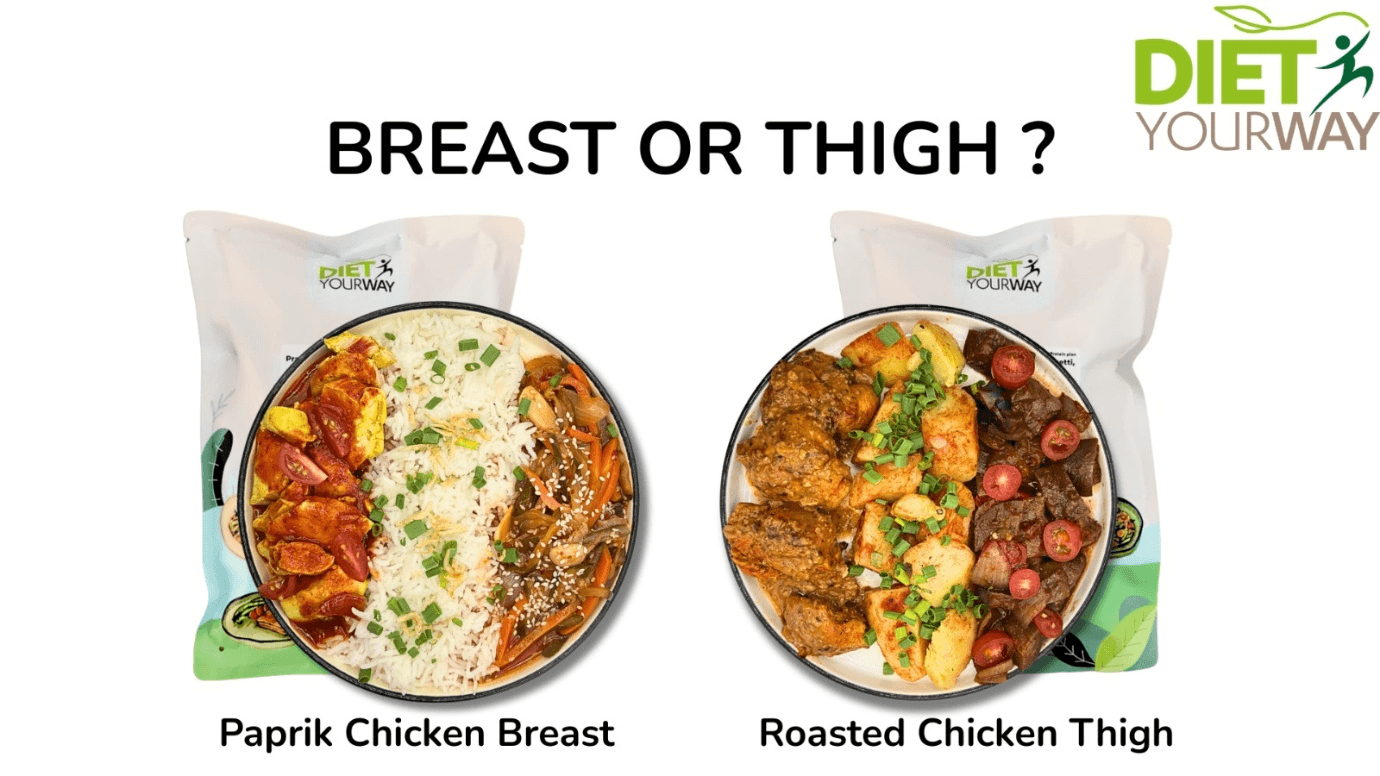
How DYW Incorporates Chicken Thigh into Healthy Weight Loss Meals
At Diet Your Way (DYW), we believe that a healthy diet should be both nutritious and enjoyable. Although chicken breast is a popular lean protein, we also incorporate chicken thigh into selected meals because healthy eating doesn't have to be limited to one cut of meat.
The key lies in how the chicken is prepared. To reduce unnecessary fat, we remove the skin and trim away excess visible fat before cooking. We then use lower-calorie cooking methods such as grilling, baking, or steaming, allowing the chicken to retain its natural tenderness and flavour without relying on excessive oil for deep-frying.
Each meal is also carefully portioned and paired with nutrient-rich vegetables and balanced carbohydrate sources. This ensures that every dish provides adequate protein and essential nutrients while supporting calorie control for those working towards their weight management goals.
Including chicken thigh also allows us to create a more diverse menu. While chicken breast remains a great option, serving the same ingredients repeatedly can make healthy eating feel repetitive. By offering both chicken breast and properly prepared chicken thigh, we provide greater variety without compromising nutritional quality.
At DYW, we believe that sustainable weight loss is built on consistency rather than restriction. Offering a wider selection of balanced, flavourful meals makes it easier for our customers to enjoy healthy eating as part of their everyday lifestyle, helping them stay committed to their long-term health goals.
We believe that healthy food should be enjoyable, convenient, and nutritionally balanced. Our diet meal plans are designed by nutrition professionals to provide the right balance of protein, carbohydrates, and healthy fats.
Whether your preference is chicken breast or chicken thigh, our meals are thoughtfully prepared to support your health goals while delivering great taste.
Start Your Healthy Eating Journey Today
Explore DYW's healthy meal delivery services and discover how convenient, portion-controlled meals can help you stay on track with your wellness and weight-management goals.
References
- Abdullah, F.A. and Buchtová, H., 2017. Quantity and quality properties of breast and thigh of chicken broilers from organic and conventional production systems. Journal of Food Safety and Food Quality-Archiv fur Lebensmittelhygiene, 68(3), pp.56-62.
- Bohrer, B.M., 2018. Correlation of chicken breast quality and sensory attributes with chicken thigh quality and sensory attributes. Canadian Journal of Animal Science, 99(3), pp.465-474.
- Baston, O. and Barna, O., 2010. Raw chicken leg and breast sensory evaluation. Food Sci. Technol, 11(1), pp.25-30.
- Damaziak, K., Stelmasiak, A., Riedel, J., Zdanowska-Sąsiadek, Ż., Bucław, M., Gozdowski, D. and Michalczuk, M., 2019. Sensory evaluation of poultry meat: A comparative survey of results from normal sighted and blind people. PloS one, 14(1), p.e0210722.
- Pellattiero, E., Tasoniero, G., Cullere, M., Gleeson, E., Baldan, G., Contiero, B. and Dalle Zotte, A., 2020. Are meat quality traits and sensory attributes in favor of slow-growing chickens?. Animals, 10(6), p.960.
